Dec. 3, 2025; New York — Community Solutions today released a new impact assessment showing that recent changes in the U.S. Department of Housing and Urban Development’s FY 2025 Continuum of Care (CoC) Program Notice of Funding Opportunity (NOFO) will destabilize rental markets nationwide, costing small business landlords as much as $1.8 billion in rental payments, and putting tens of thousands of formerly homeless households at risk of losing their homes.
“These policy changes come at a moment when the country is already grappling with deep housing shortages and an affordability crisis. The new HUD rules will make tens of thousands of homes unaffordable almost overnight and harm individuals, families, small businesses, and communities at the worst of times,” said Rosanne Haggerty, President of Community Solutions. “Private landlords, especially small and mid-sized property owners, have been essential partners in helping communities house their most vulnerable neighbors. The new 30% cap on Permanent Housing and reduced funding protections put those landlords in grave financial jeopardy. Many will face sudden revenue losses, eviction costs, and even mortgage defaults as direct consequences of the new HUD rules.”
The analysis finds that HUD’s introduction of a 30 percent cap on Permanent Housing renewals and a reduction of Tier 1 funding protections to just 30 percent will force communities to discontinue the majority of existing housing programs—regardless of performance. These changes threaten an estimated $1.8 billion in annual rent payments currently flowing to private landlords through CoC-funded programs.
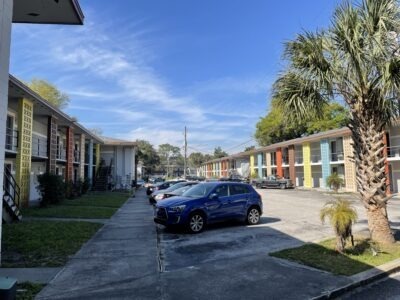
The report highlights that more than 100,000 rental homes dedicated to supportive housing will be affected due to the mathematical impossibility of complying with the new funding rules. Class B and C rental properties — older, modest-income buildings that form the backbone of the nation’s affordable rental supply — face the greatest financial exposure.
“This policy shift effectively transforms stable, government-backed rental contracts into high-risk investments overnight,” said Adam Ruege, Principal for Policy & Evaluation at Community Solutions and author of the report. “Landlords who rely on predictable payments will face sudden income loss, eviction costs, and even mortgage default.”
States with the highest dollar-value exposure include California ($344M), New York ($139M), and Massachusetts ($99M), with significant impacts also projected in Florida, Texas, and Missouri.
The report warns that the policy changes will trigger a cascade of economic consequences: property disinvestment, increased evictions, destabilized neighborhoods, and rising costs for shelters and emergency response systems.
Community Solutions advises immediate federal action:
- Congress should renew all CoC grants expiring in 2026 for 12 months to prevent loss of homes and the economic impacts on small property owners and communities, and allow time for policy correction.
- HUD should provide local flexibility to allow communities to preserve critical housing resources at a time of rising housing costs and pervasive housing shortages.
“Without quick action, these changes will compound the nation’s housing shortages and affordability crisis,” said Haggerty. “The consequences will be felt not only by struggling families and individuals, but by landlords, neighborhoods, and entire communities.”
Read the full report here.
###
About Community Solutions
Community Solutions is a nonprofit working to make homelessness rare and brief. It leads Built for Zero, a network of more than 160 US communities using a field-tested, outcomes-focused approach to reducing and preventing homelessness.
Learn more at www.community.solutions or follow us at @CmtySolutions.