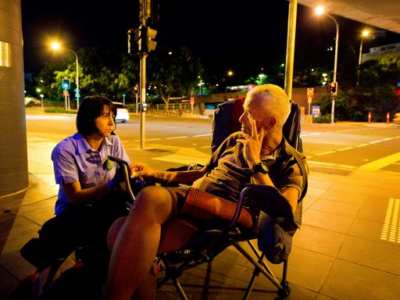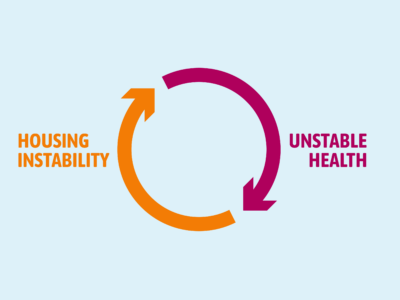
Older adults are the fastest-growing group of people experiencing homelessness in the United States. Many are navigating chronic health conditions, cognitive decline, mobility challenges, or the need for daily living support — often while moving between shelters, hospitals, and the street.
Yet in many communities, systems designed to support older adults, health care, and homelessness response operate in parallel rather than together. The result: people fall through gaps that data, coordination, and shared planning could help close.
To support communities ready to change that, Community Solutions — in partnership with the California Health Care Foundation and HC2 Strategies — developed the Needs and Assets Assessment Toolkit for Older Adults Experiencing Homelessness. The toolkit offers a practical, data-informed approach to understanding who this population is, what they need, and what resources already exist to support them.
Want to see how communities are putting these strategies into practice?
Watch the full conversation with Sacramento leaders to learn what worked and how you can apply these strategies in your community.
What the toolkit is designed to do
This toolkit is for Continuums of Care, local governments, health care providers, and housing and service organizations working together to better serve aging adults experiencing homelessness. It’s not a one-size-fits-all model. It’s a flexible guide communities can adapt based on their local systems, data capacity, and partnerships.
Rather than starting with what’s missing, the toolkit helps communities look at the full picture: needs and assets.
Five core ideas that shape the toolkit
- Start with the system you have. Before launching new initiatives, communities benefit from understanding their existing landscape: who’s involved, how systems interact, and where collaboration already exists.
- Use data to define the problem and the people behind it. Combining quantitative data with lived experience and frontline insight helps communities move beyond averages and toward clear, human-centered profiles of need.
- Map assets before building new solutions. Across homelessness response, health care, aging services, hospice, and behavioral health, many resources already exist but are often underutilized or disconnected.
- Relationships are infrastructure. Sustainable change depends on trust, shared language, and clear roles across sectors. The toolkit treats relationship-building as core work, not a side task.
- Assessment is a starting point, not the end goal. Needs and assets assessments create the foundation for action, informing policy advocacy, service design, funding strategies, and implementation planning.
A tool communities can use and reuse
The toolkit was informed by a real-world application in Sacramento City and County, but it’s designed to travel. Communities can engage with the sections most relevant to their current moment, whether they’re strengthening data-sharing, aligning partners, or planning next-phase investments.
Understanding the needs of older adults experiencing homelessness and the systems meant to support them is essential to building responses that are humane, effective, and durable.