Jonathan Scott builds houses for a living. He also, it turns out, thinks carefully about who can afford to live in them.
At the Milken Institute’s 2026 Global Conference, Scott joined a panel on housing supply alongside the mayor of Austin, Texas, an opportunity zone investor, and a mortgage servicer executive. The conversation covered construction costs, zoning reform, and interest rates. But Scott opened with something more fundamental.
“I honestly think the biggest challenge in the housing space is ignorance,” he said. “There is a misunderstanding of how this affects our daily lives, financially, the cost of homelessness, how that affects social services, but also supply.”

“I honestly think the biggest challenge in the housing space is ignorance.”
— Jonathan Scott
That framing matters. Most conversations about homelessness at investor conferences stay firmly in the supply lane, where the problem is abstract: a shortage of units, a calculation of financing costs, a zoning reform checklist. Scott went somewhere different. He named the gap between what people think they see on the streets and what is actually driving it.
He is right that misunderstanding is part of what keeps cities stuck. When people believe homelessness is caused primarily by personal failure or untreatable mental illness, they resist the investments that actually move the needle. When they believe nothing has ever worked, they stop demanding accountability for results. Both of those beliefs are common. Neither is accurate.
What cities making progress have in common
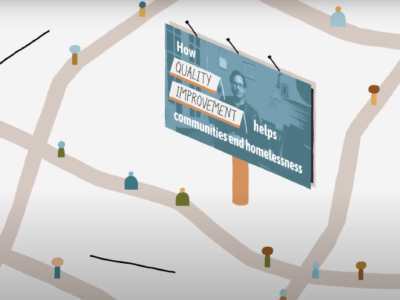
What Scott described, without using the field’s terminology, is precisely what separates cities making visible progress from cities that have cycled through the same responses for decades. The difference is approach. Not resources alone, not political will alone, but whether a city is running a coordinated, outcomes-driven response that tracks real people by name and holds the system accountable for getting them housed.
Toward the end of the panel, when the moderator asked where investors should put their money for the fastest impact, Scott pointed to the work of converting existing, underutilized housing stock into something useful. He cited Community Solutions by name.
“There’s a group, Community Solutions, who has been working with the World Economic Forum and other agencies to try and figure that out,” he said. “It’s working in Denver. It’s working in places all over the country.”
What Denver’s results actually show
Denver is a useful example. Over the past several years, the city drove the largest multi-year reduction in unsheltered homelessness of any major U.S. city, moving more than 800 people indoors and cutting street homelessness by 45%. That result did not come from a single program or a funding surge. It came from a coordinated approach that used real-time, by-name data to match specific people to specific housing resources, measured outcomes at the population level, and kept pushing until the numbers moved.
Supply matters, but coordination is the multiplier
Scott is right that supply matters. Communities cannot move people from streets to housing if there is no housing to move them into. But the cities showing the fastest results are not the ones that waited for the supply problem to resolve. They are the ones that ran a faster, smarter response with the housing that existed, while also pressing for more.
The ignorance Scott named at the start of the panel has a specific policy consequence: it tends to produce responses designed to manage homelessness rather than reduce it. Criminalization. Shelter without services. Housing without coordination. Decades of cities trying each of those approaches in turn, and the problem persisting.
The good news, as Scott noted, is that the alternative is working. Cities proving it range from small communities in rural Texas to mid-sized cities in the South to major metros where the problem has long seemed unmanageable. What they share is a willingness to measure the problem precisely, act with urgency, and hold themselves accountable for visible results.